
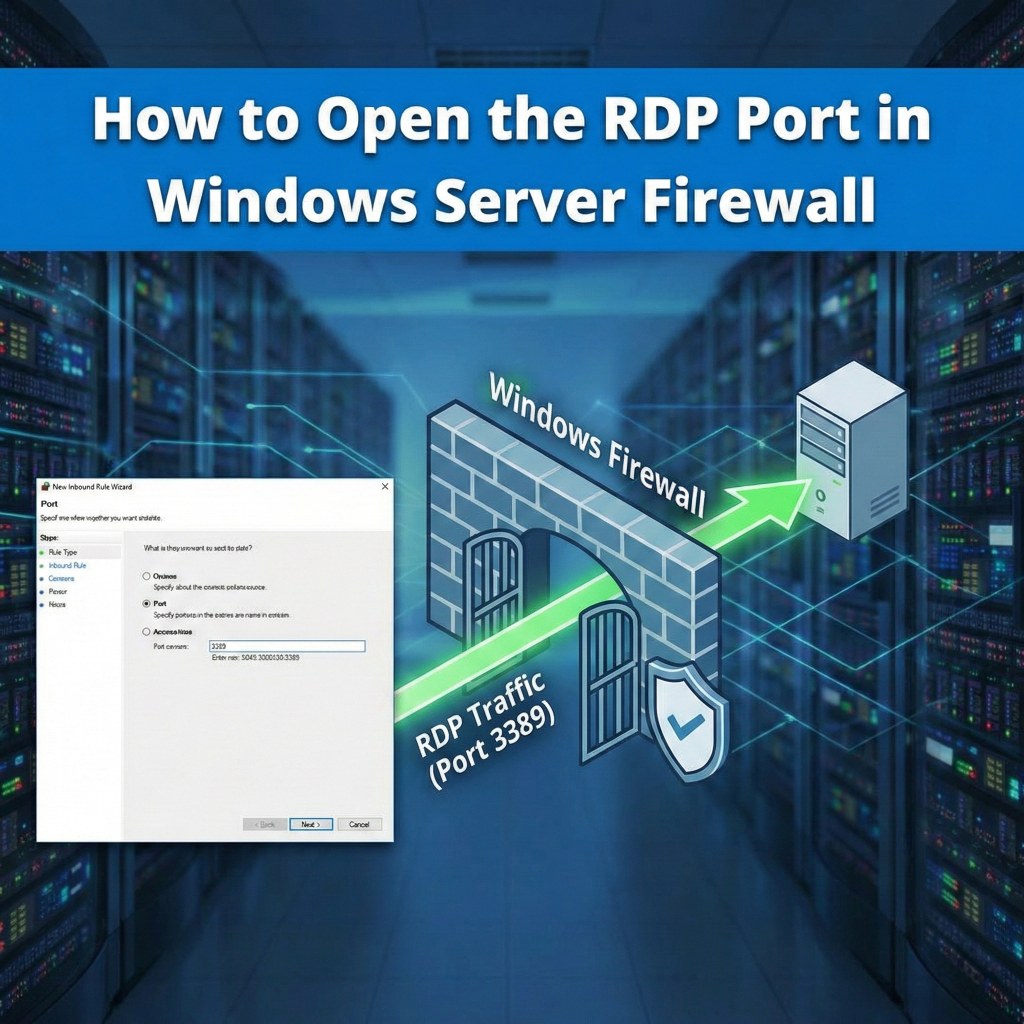
How to Open the RDP Port in Windows Server Firewall
Allowing Remote Desktop traffic through Windows Defender Firewall.
Even if Remote Desktop Services is enabled, you cannot connect if the Windows Firewall is blocking the traffic. You must create an Inbound Rule to allow TCP traffic on port 3389.
⚠️ Security Note: RDP uses port 3389 by default. Opening this port to the public internet is a security risk. Ensure you are using a VPN or restricting the rule to specific IP addresses whenever possible.
Method 1: Using Windows Firewall (GUI)
This is the standard method using the graphical interface.
- Open the Start Menu, search for Windows Defender Firewall with Advanced Security, and open it.
- In the left pane, click on Inbound Rules.
- In the right pane (Actions), click New Rule....
- Rule Type: Select Port and click Next.
- Protocol and Ports:
- Select TCP.
- Select Specific local ports and enter
3389. - Click Next.
- Action: Select Allow the connection and click Next.
- Profile: Check Domain, Private, and Public (uncheck Public if you want to restrict internet access) and click Next.
- Name: Enter a name (e.g., "Allow RDP") and click Finish.
Method 2: Using PowerShell (Fastest)
You can create the rule instantly using a single PowerShell command. Run PowerShell as Administrator.
To open the standard RDP port (3389):
New-NetFirewallRule -DisplayName "Allow RDP" -Direction Inbound -LocalPort 3389 -Protocol TCP -Action Allow
Method 3: Using Command Prompt
If you prefer the classic command line (netsh):
netsh advfirewall firewall add rule name="Allow RDP" dir=in action=allow protocol=TCP localport=3389
Author Bio

Microsoft Certified Professional
With over 20 years of experience deploying and managing enterprise Windows Server environments, Keloth leads technical implementation at RDS CAL Store. He specializes in Remote Desktop Services infrastructure, secure remote architecture, and helping IT teams seamlessly scale their official licensing.
Related Posts
Understanding RDS CAL Downgrade Rights
Home – Understanding RDS CAL Downgrade Rights Understanding RDS CAL Downgrade Rights When managing a Remote Desktop Services environment, hardware and software upgrades rarely happen all at once. You might purchase new Client Access Licenses (CALs) today, but still need them to authorize connections to older servers running in your datacenter. Microsoft accommodates this reality…

How to Disable Remote Desktop Easy Print in Windows Server (2016-2025)
Home – How to Disable Remote Desktop Easy Print in Windows Server (2016-2025) How to Disable Remote Desktop Easy Print in Windows Server (2016-2025) Remote Desktop Easy Print is the default driver Windows uses to map local client printers into a remote session. While convenient, it strips away advanced printer features (like stapling, tray selection,…

How to Create a Remote Desktop User in Windows Server (2016, 2019, 2022 & 2025)
Home – How to Create a Remote Desktop User in Windows Server (2016, 2019, 2022 & 2025) How to Create a Remote Desktop User in Windows Server (2016, 2019, 2022 & 2025) Provisioning remote access for a new employee requires more than just creating a standard Windows account. To securely connect to a Session Host,…

How to Fix the CredSSP “Encryption Oracle Remediation” RDP Error
Home – How to Fix the CredSSP “Encryption Oracle Remediation” RDP Error How to Fix the CredSSP “Encryption Oracle Remediation” RDP Error If you are managing Windows Servers, you have likely encountered this terrifying error message when trying to connect via Remote Desktop: “An authentication error has occurred. The function requested is not supported… This…