
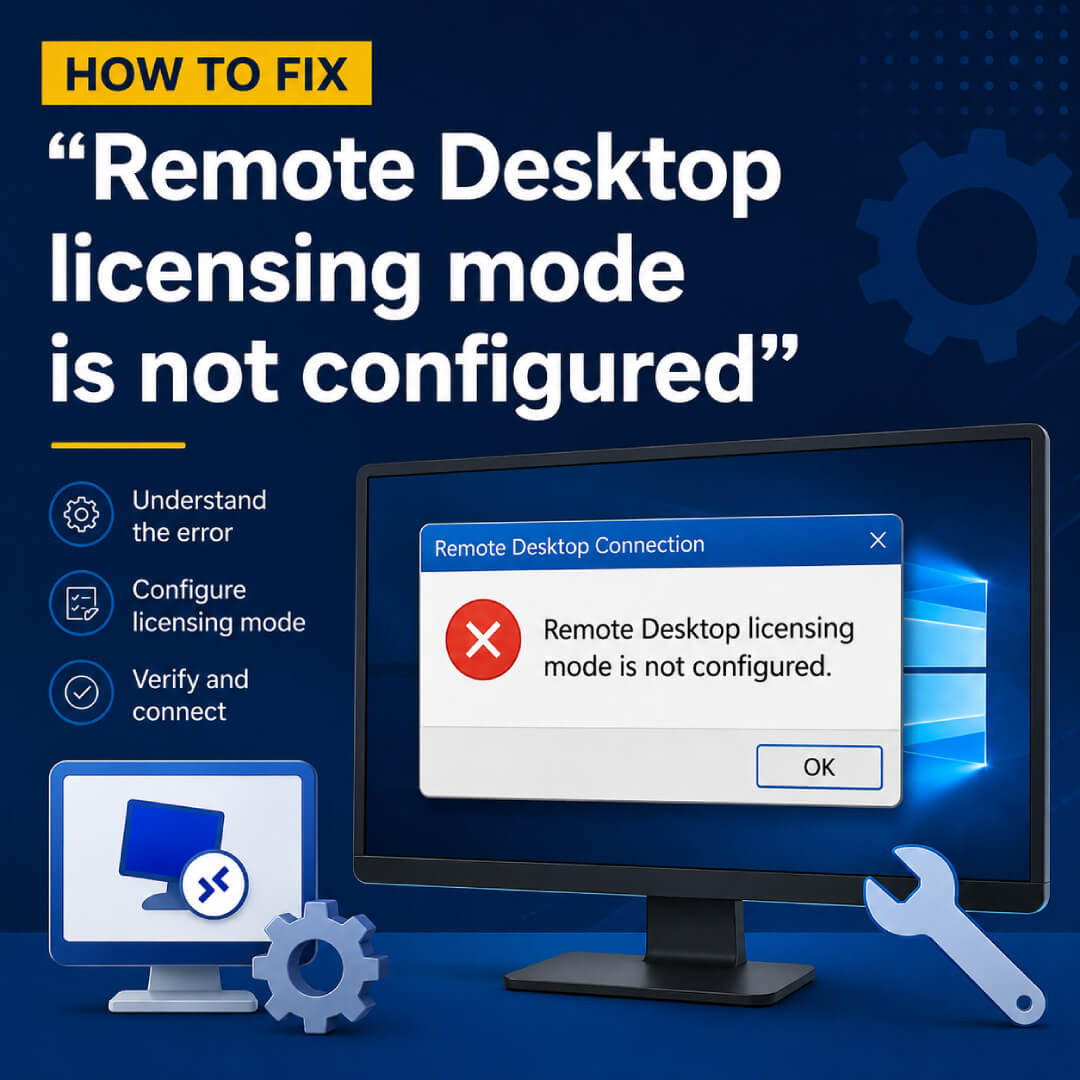
How to Fix the "Remote Desktop licensing mode is not configured" Error
If you see a balloon notification or Server Manager alert stating "Remote Desktop licensing mode is not configured," your RD Session Host is in a state of confusion. Even if your Remote Desktop Licensing Server is fully activated and loaded with CALs, the Session Host does not know whether it should be requesting Per User or Per Device licenses.
Until this mode is explicitly defined, the server will continue to consume its 120-day grace period. Once that grace period expires, remote users will be entirely locked out. Here is the universally supported Group Policy method to configure the licensing mode and restore proper authorization.
Before You Begin
Ensure that you have the following information and access levels ready:
- You must have Domain Administrator or Local Administrator privileges on the affected server.
- You must know exactly which type of RDS CALs (Per User or Per Device) you have purchased and installed.
-

Open the Group Policy Editor
In the left-hand pane, drill down through the following exact path:
To apply this fix locally to the Session Host, log into the server. Press the Windows Key + R, type gpedit.msc, and hit Enter to launch the Local Group Policy Editor.

-
Navigate to the Licensing Policies
In the left-hand pane, drill down through the following path:
Computer Configuration > Administrative Templates > System > Credentials Delegation.

-
Set the Licensing Mode
In the right-hand pane, double-click the policy named Set the Remote Desktop licensing mode. Change the radio button from "Not Configured" to Enabled.

-
Select Your CAL Type
Under the "Options" section in the same window, click the dropdown menu and select the mode that matches your purchased licenses: Per User or Per Device. Click Apply and OK.

-
Specify the License Server (Recommended)
You do not need to reboot your client machine. Open your Remote Desktop Connection app and attempt to connect to the server again. The connection will now succeed.

-
Force the Group Policy Update
Open Command Prompt as an Administrator and run the command
gpupdate /force. Once completed, open the RD Licensing Diagnoser in Server Manager to verify that the licensing mode is now successfully configured and recognizing your CALs.

Alternative Method: Server Manager GUI (For Full Deployments)
If you have deployed a full Remote Desktop Services environment (with a Connection Broker) rather than a standalone Session Host, you can define the licensing mode directly from the Server Manager deployment properties.
Via Server Manager:
1. Open Server Manager and click Remote Desktop Services in the left pane.
2. Under the Overview section, click Tasks > Edit Deployment Properties.
3. Select the RD Licensing tab.
4. Choose your licensing mode (Per User or Per Device) and add your license server to the deployment.
5. Click Apply to save the configuration across your broker and session hosts.
Admin Strategy: Mixing "Per User" and "Per Device" CALs on a single server is technically possible, but it requires standardizing the Session Host to one mode and strictly monitoring the other. For a seamless experience, we highly recommend matching your configured mode to a single, unified CAL type.
Do You Need Additional RDS CALs?
Configuring the licensing mode only works if you have authentic licenses waiting on the server. If your 120-day grace period has expired, you must deploy permanent Client Access Licenses to restore your users' remote access.
Author Bio

Microsoft Certified Professional
With over 20 years of experience deploying and managing enterprise Windows Server environments, Keloth leads technical implementation at RDS CAL Store. He specializes in Remote Desktop Services infrastructure, secure remote architecture, and helping IT teams seamlessly scale their official licensing.
Related Posts
Understanding RDS CAL Downgrade Rights
Home – Understanding RDS CAL Downgrade Rights Understanding RDS CAL Downgrade Rights When managing a Remote Desktop Services environment, hardware and software upgrades rarely happen all at once. You might purchase new Client Access Licenses (CALs) today, but still need them to authorize connections to older servers running in your datacenter. Microsoft accommodates this reality…

How to Disable Remote Desktop Easy Print in Windows Server (2016-2025)
Home – How to Disable Remote Desktop Easy Print in Windows Server (2016-2025) How to Disable Remote Desktop Easy Print in Windows Server (2016-2025) Remote Desktop Easy Print is the default driver Windows uses to map local client printers into a remote session. While convenient, it strips away advanced printer features (like stapling, tray selection,…
How to Create a Remote Desktop User in Windows Server (2016, 2019, 2022 & 2025)
Home – How to Create a Remote Desktop User in Windows Server (2016, 2019, 2022 & 2025) How to Create a Remote Desktop User in Windows Server (2016, 2019, 2022 & 2025) Provisioning remote access for a new employee requires more than just creating a standard Windows account. To securely connect to a Session Host,…

How to Fix the CredSSP “Encryption Oracle Remediation” RDP Error
Home – How to Fix the CredSSP “Encryption Oracle Remediation” RDP Error How to Fix the CredSSP “Encryption Oracle Remediation” RDP Error If you are managing Windows Servers, you have likely encountered this terrifying error message when trying to connect via Remote Desktop: “An authentication error has occurred. The function requested is not supported… This…